Stanisław Duda Story
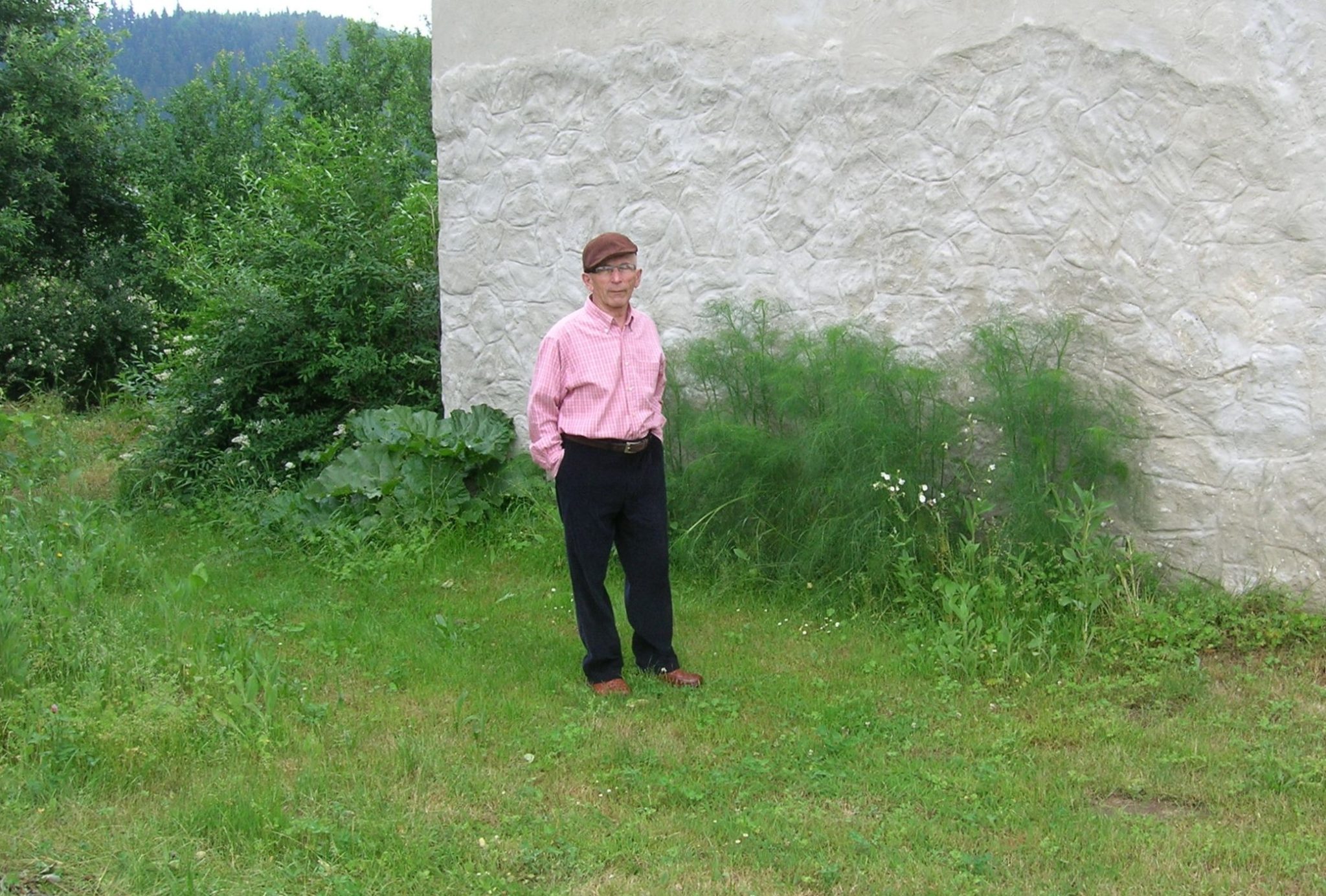 STANISŁAW DUDA entered to the artistic world in 1983, or rather he invited the art world to his home.
He opened at his home first in Poland art gallery in the countryside under the auspices of The Bureau for Art Exhibitions /BWA Poland/.
Duda was overwhelmed with the passion of promoting contemporary art on the Polish village.
The sensation of this idea was the courage to presented exhibitions of famous Polish and International Artists in a private home, which was located far from cultural center.
The gallery was visited by guests from all over the world.
The structure of the Bureau for Art Exhibitions featured inclusion, which allowed it to show the works of professional Artists.
The gallery also organized meetings with the artists, artistic events and charity actions.
Most importantly, the gallery had educational functions for school youth.
Being in a private house, the gallery was able to provide a unique opportunity for the artists which gave birth to their freedom of expression.
This freedom of expression, along with independent artistic activities, was in contrast to the bureaucracy and highly structured autocratic cultural institutions in Poland at the time.
 Time has forced changes
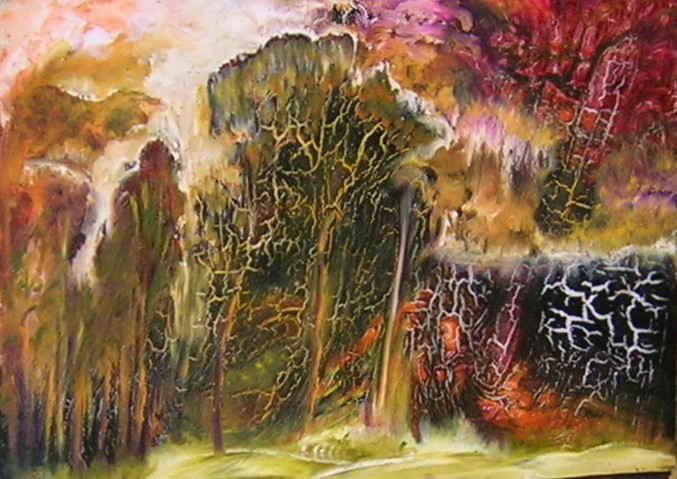
In the early 1990’s, the gallery changed its character and become represents the artist.
Day by day the painting become priority in Duda’s life.
Duda has chosen painting as his way. Has the life of painting chosen him?
He can no longer deny being completely absorbed in painting, enclosed in the “cocoon of his own thoughts” decided not to expose the paintings in other galleries.
For many years he kept his paintings an own gallery, only on rare occasions did he allow them to be shown.
Where are the paintbrushes, easel?
The workshop is quaint.
It seems like a place to sit down, but not studio.
Only tubes of oil paint scattered all around.
A piece of beaverboard is on the floor.
The artist leans forward above it in deep concentration.
There is no rehearsal for this.
He does not confer with others nor solicit opinions.
Both of his hands are busy.
One squeezes a hard crushed tube of paint, than the second one gently grinds the pigment to achieve the desired hue.
Then using finger movements and applies the subsequent layers of paint.
The warm of the fingers combined with the structure of the color paint, the immediate transfer to the primed surface is a fantastic example of the physical symbiosis: the artist – the painting.
In this process, one can observe the great mystical relationship between a talented man and his creation.
 With experienced intuition, he senses the texture of the paint.
Without hesitation, he creates the effect of light using the colors and mastery of the technique.
But the artist is not finished.
He needs to add color, depth, and contrast.
Using his decades long expertise in development and refinement of techniques.
He explodes with daring swaths of vibrant color and pulsating organic shapes.
The fascination with the color, and the development and improvement of the painting technique gradually developed over the years.
As a result, the eye accommodation can be observed and certainly the movements of the experienced hand.
As a result the ability of the eyes to focus can be observed along with certain movements of the experienced hand.
These processes have followed many years of focus on extracting the intended effects in miniature images.
After these experiences, Duda moved his vision to larger surfaces.
In works painted in the last two decades, there has been a tendency to take a closer look at the phenomena of the landscape created by the ephemeral aspect of nature.
In each subsequent oil painting, it takes the risk of capturing the speed and variability of the changing nature, while emphasizing the peace and harmony that prevails in it.
The apparent inclination to define the horizon often produces a specific distinction between the whole picture and the independent parts.
Whenever, chromatic white and yellow appear, they bring a hope for light and coherence of the image.
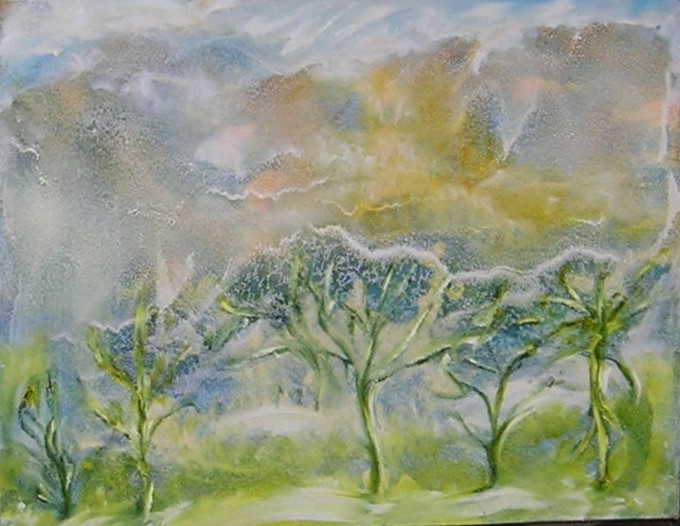 The loneliness of light is an example of a synthesized image of the moon, a white spot in a monochrome space announces night.
In numerous pictures you can watch delicate thin flakes of paint, giving the impression of a filigree lightly placed on the glaze.
Dynamic paintings are placed on the border of the world of abstracts and the real world.
The action of each of them seems to play in a certain space, stretching horizontally and deeper into the image.
Adding color is not only about conveying specific visual values of a fixed representation,
it is rather a way of describing his emotional state.
In this painting it becomes important to cover the surface of the painting with paint.
The edges of the stain-thin paint are the basis for further painting.
It is this quality that is the foremost element of the composition, suggesting a subject that changes depending on the individual’s sensitivity and perceptual ability.
The painter saturates the image with color, so suddenly one spot, a flash of light, a thin line to break, out of the drama of their own dilemmas.
His intellectual reflections reveal the contrasting experiences of calmness and anxiety, uncertainty and understanding, and most importantly, alienation and acceptance.
This translates into intensity and gradation of color.
Duda reveals a peculiar fascination with nature transposed into a characteristic language of color’s emotion.
It is precisely the risk of experimentation with the personal nature of color. The variations of color and the infinite possibilities of applied experience, that are created in both a miniature and a larger surface.
Duda says: “I don’t care about anything else like as long as I’m painting. For me, painting is primarily a vision of everyday life with the sun and the clouds, with its care and joy.
With saturated oranges and luminous greens, with hot carmine accents and cadmium yellow, with a horizontal blue-sky strain at the top.
Painting is the language that I use to describe about nature and talk about what’s the most interesting, unpredictable, and most valuable in it.
Color produces color.
This is mainly due to the contrast of which I’am intensely trying to control.
From this process comes the kind of interaction in which I participate.
On this painting this interaction turns into a hard fight, which sometimes ends with the victory of color over my idea. Following this course is meant to pay attention to the constant pursuit of order; both formal and aesthetic.
I would call it creative discipline individually developed and consistently respected. “

The concept of the original forms was born in the late 1980’s.
They embodied mutually agreed upon components of the form, are born from wood, which destroiyed by people, and found objects.
The process of beautification and adding elements, is the deliberate challenge of reality.
He began working with pieces of wood, combining them with various plastics into a complex structure.
It would be to say that those organic forms reflect certain changes in the surrounding world.
They are some kind of allusive commentary of events. Sometimes they are descriptions of different characters.
These forms personalize the space, excluding indifference.
“I take from the nature, but then it goes into imagination. These aesthetic attributes might express some features of contemporary life.
There are things that excite me, provoke my imagination.
And are constantly being born new.“

Written by Anna E. Duda, art historian
To contact Anna E. Duda, e-mail duda@duda.gallery